

AI website builders have moved well past simple template pickers. Some generate a full multi-page site from a single sentence. Others focus on upgrading a site you already have, or on getting a single landing page live before a product even exists. The category looks crowded from the outside, but the tools inside it are not interchangeable – a tool built for a pre-launch waitlist solves a different problem than one built for a small business that needs a CRM and invoicing alongside its website.
This list covers five AI website builders and webmaster tools worth knowing about, what each one is actually for, and how they differ once you look past the “build a website with AI” pitch they all share.
Popular AI website builders and webmaster tools
uKit AI
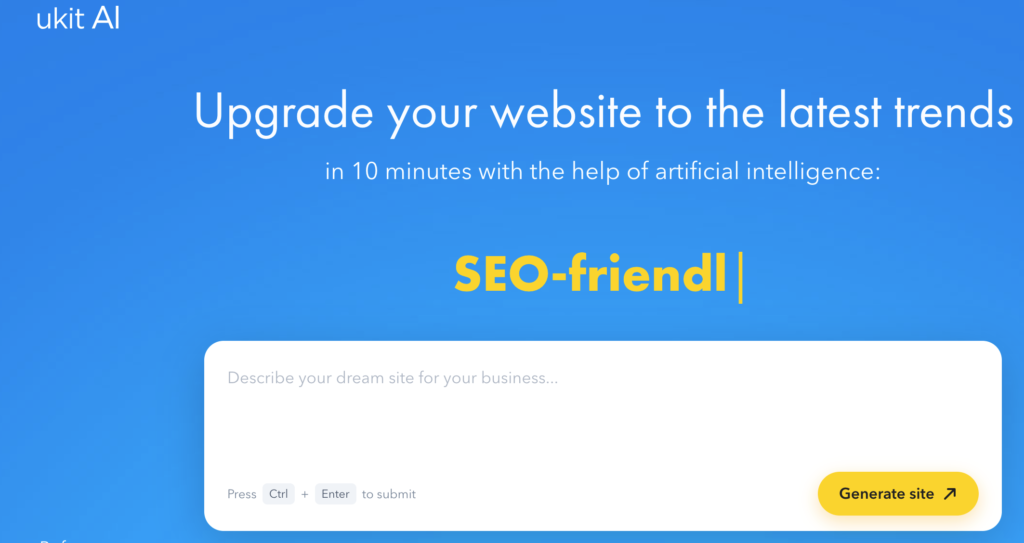
uKit AI takes a different angle than most builders on this list – instead of starting from a blank page, it starts from a website you already have. Give it a link to an existing site and it analyzes the layout and content, then produces an upgraded version with a modern, mobile-responsive design, HTTPS, SEO-friendly HTML5 and CSS3, and access to a CMS with more than 30 built-in business tools. The result is reviewed inside the uKit platform before publishing, so it works as a fast redesign tool rather than a fully automated replacement for a webmaster.
Best for Refreshing an outdated existing website quickly
Typical users Small business owners, site owners on older platforms, webmasters handling client refreshes
Durable
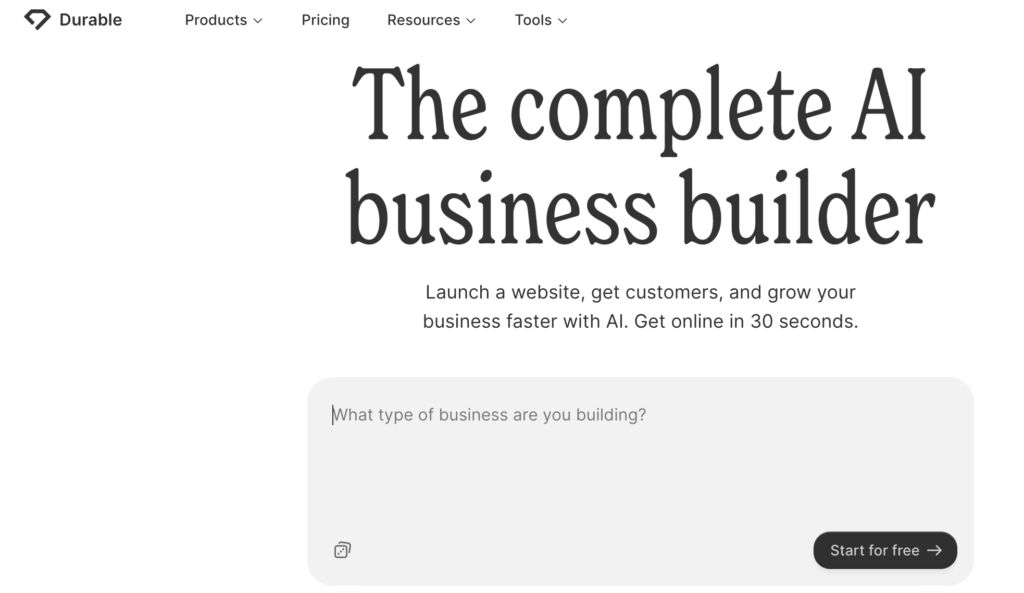
Durable generates a complete website – copy, images, layout, and a custom domain setup – in under a minute from a short description of the business. What sets it apart from a pure website generator is everything bundled around the site itself: built-in CRM, invoicing, AI-written marketing content, and basic analytics, all under one subscription. It’s less “AI website builder” and more “AI business starter kit” with the website as the entry point. The tradeoff is that design flexibility is more limited than platforms built around customization, so it suits speed and convenience more than a highly distinctive visual identity.
Best for Launching a small business website plus basic business operations together
Typical users Solopreneurs, service businesses, consultants, and other small teams that don’t want to manage separate tools for invoicing or lead tracking
Dorik AI
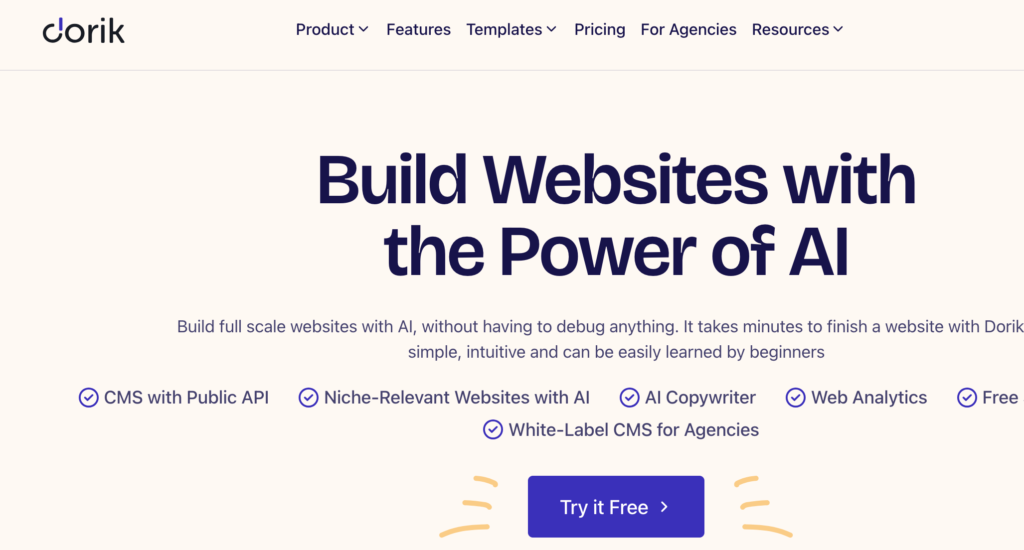
Dorik combines AI-generated, multi-page websites with a no-code drag-and-drop editor and a fairly large library of UI blocks and templates, which makes it more design-flexible than a single-prompt generator once the AI draft is in place. A site can be generated from a text description in under a minute, then refined block by block. Dorik also offers a white-label CMS aimed specifically at agencies managing multiple client sites, along with hosting, SEO settings, and export options that reduce platform lock-in compared to some closed builders.
Best for A balance of fast AI generation and real design control
Typical users Freelancers, agencies managing several client sites, and small teams who want more layout flexibility than a pure AI generator usually offers
Mixo
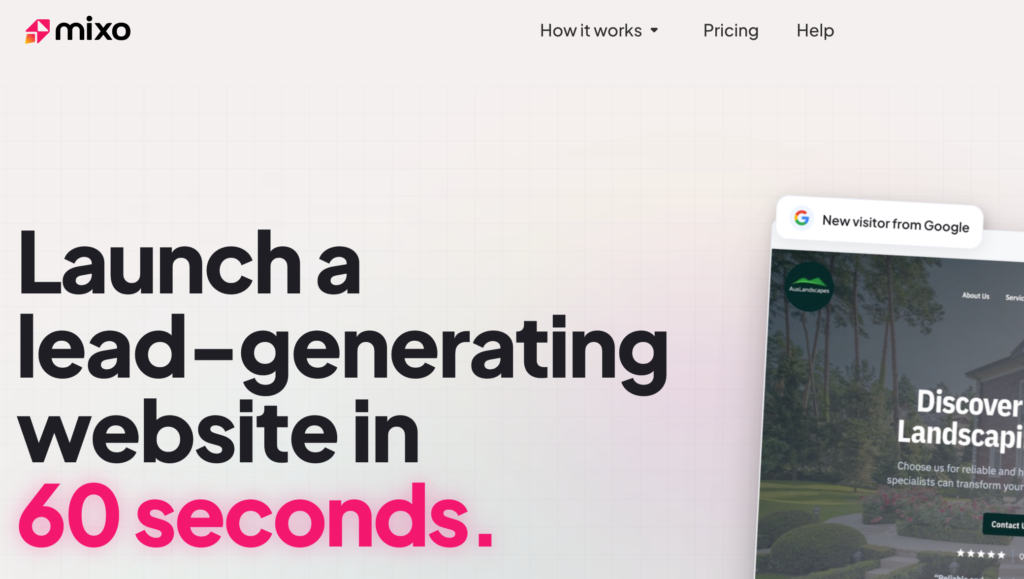
Mixo is built for one specific job: turning a short product or business description into a live, single-page landing site with a working email signup form, in well under a minute. It is not trying to be a full website platform – there’s no multi-page structure, no e-commerce, and limited design control once a page is generated. What it does well is idea validation: getting a credible-looking page in front of people fast enough to start collecting a waitlist or testing interest before committing more time to a project.
Best for Pre-launch landing pages and fast idea validation
Typical users Founders, indie makers, and early-stage startups validating an idea before building anything more substantial
CodeDesign.ai
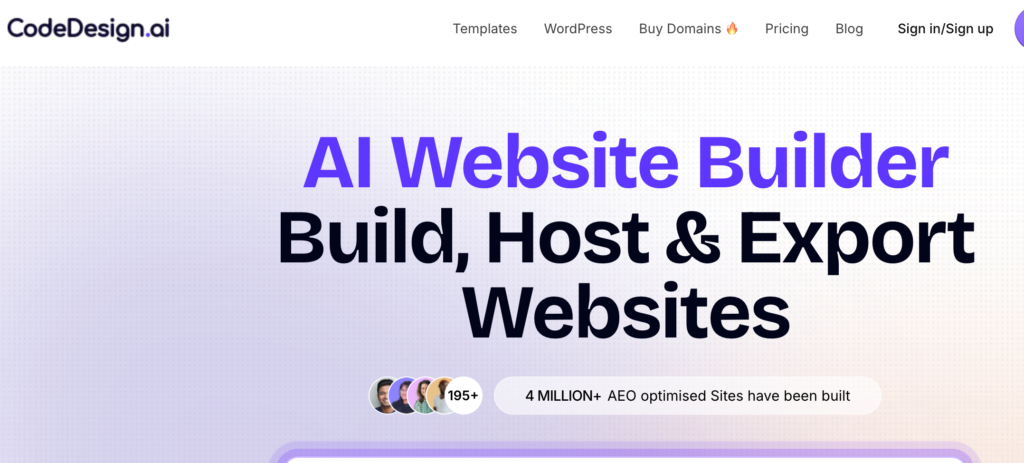
CodeDesign.ai generates websites and sales funnels from a prompt, with templates available in multiple languages and a focus on getting a usable, professional-looking site or funnel live quickly. It leans toward marketing-oriented use cases – landing pages, funnels, and campaign-ready sites – more than long-term content publishing, and it offers both subscription and one-time pricing options, which is less common in this category. It’s a reasonable option for users who want AI-assisted generation without committing to an ongoing monthly platform fee.
Best for Quickly building marketing sites and sales funnels
Typical users Marketers, small agencies, and non-technical founders running campaign-style sites
AI website builders: quick comparison
| Tool | Main Use Case | Best Fit |
| uKit AI | AI redesign of an existing site | Owners refreshing an outdated website |
| Durable | AI website plus business tools (CRM, invoicing) | Small businesses wanting an all-in-one starter kit |
| Dorik AI | AI generation with real design control | Freelancers and agencies managing multiple sites |
| Mixo | Single-page AI landing sites | Founders validating an idea fast |
| CodeDesign.ai | AI sites and sales funnels | Marketers running campaign-style pages |
How to choose the right one
Start with what you’re actually trying to publish, not which tool looks the most impressive in a demo. A pre-launch idea that just needs an email signup form is a different job than a small business that needs a real website plus a way to send invoices, and both are different again from an agency that needs to manage design across a dozen client sites without re-learning a new platform each time.
If you already have a website and the main problem is that it looks dated, a redesign-focused tool like uKit AI solves that directly without asking you to rebuild from scratch. If you’re starting from nothing and want the website bundled with the business tools you’ll need anyway – CRM, invoicing, basic marketing – an all-in-one platform like Durable removes the need to stitch together separate services. If design flexibility and agency-style management matter more than raw speed, Dorik AI’s combination of AI generation and a real block editor is worth the extra setup time. If you don’t need a website yet, just a fast way to test whether an idea is worth building at all, a single-page tool like Mixo will get you there without the overhead of a full site. And if the priority is launching marketing pages or funnels quickly, possibly in more than one language, CodeDesign.ai is built around exactly that use case.
None of these tools fully replace a webmaster or a designer once a site needs to scale, get redesigned around a specific brand, or handle anything outside its core use case. They’re strongest as a fast starting point or a focused tool for one particular job – which is also why picking based on the actual task in front of you matters more than picking based on which platform claims to do the most.
For a broader framework on narrowing down AI tools by task instead of by hype, see how to choose an AI tool without getting lost in endless lists. And if your “webmaster tools” search also covers AI coding assistants rather than no-code builders, the AI Coding Tools directory – along with hands-on reviews of GitHub Copilot and Codeium – covers that side of the comparison.